Call Us
Mail Us
Address
Kharibot Road, New Baneshwor Ward No. 31, Kathmandu, Nepal
Kharibot Road, New Baneshwor Ward No. 31, Kathmandu, Nepal
 Projects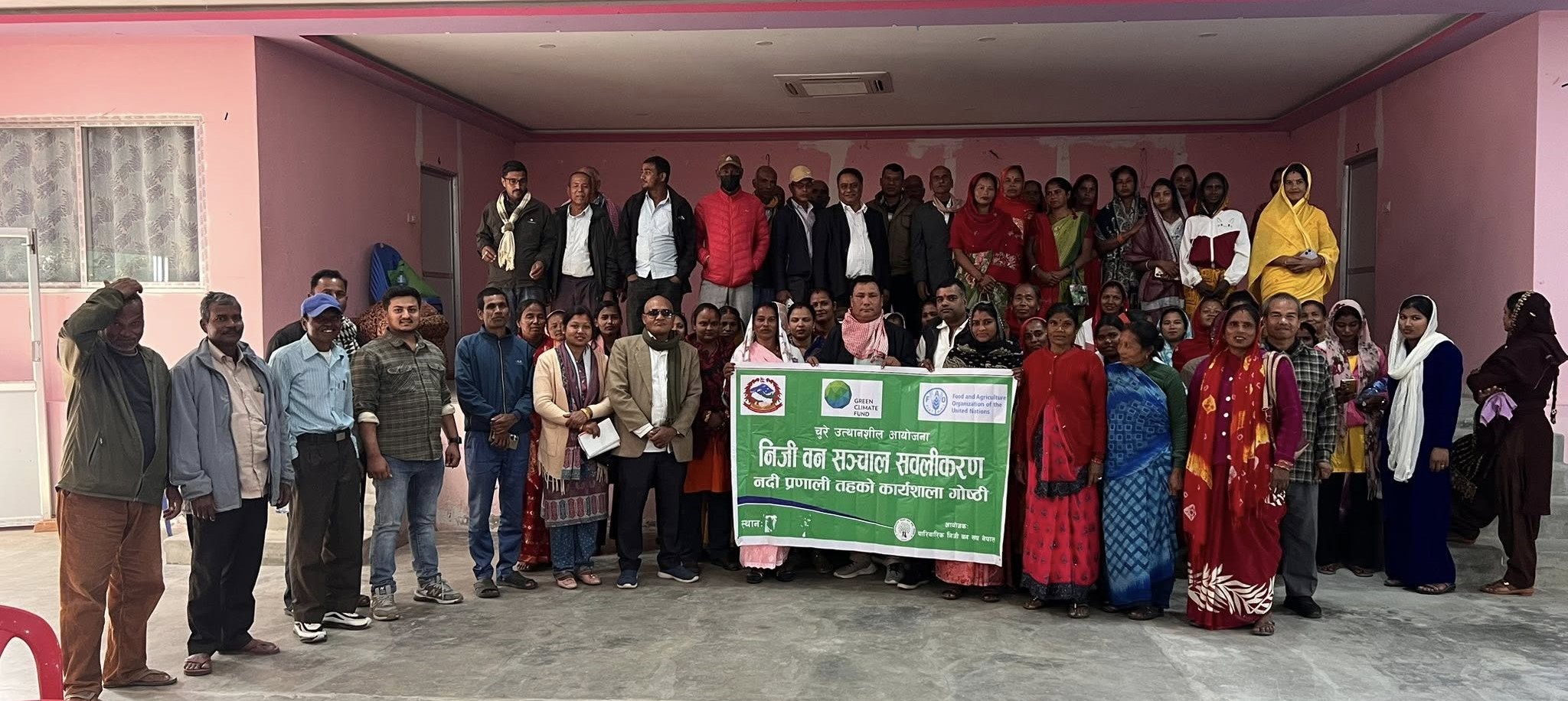
Project Background
The government of Nepal has initiated various programs to protect the Chure region realizing the increased degradation and climatic vulnerability to the communities as well as the landscape itself. To expedite the existing efforts and for concentrated interventions in eastern part of Churia landscape, Building a Resilient Churia Region in Nepal (BRCRN) project is being implemented with the financial support from the Green Climate Fund (GCF) in 26 critical river systems covering parts of Koshi, Madhesh and Bagmati Provinces. Along with significant attention on technical and financial support to strengthen the community-based forestry regimes, project also aims promoting forestry woodlots in the privately owned land and strengthening capacity of those owners as groups and networks so that the enabling policy and institutional environment for private forestry promotion could be created.
Till now the project has formed 21 such river system level networks. The project expects to support the registration of those river system level networks in the respective municipalities (as registration authority for such groups is under the jurisdiction of the local government) as well as to be the part of the national level private forestry association. The project believes that institutionalized networks of such groups can strongly advocate for policies that support the private forestry entrepreneurs ensuring sustainable forestry enterprises at the same time attracting more farmers in private forestry businesses.
Association of Family Forest Owners, Nepal (AFFON) as the national level network of private forestry owners also trust that these efforts will identify, promote and advocate for needful affirmative actions to promote Women, Dalits, Indigenous Peoples and farmers from marginalized group owning private forest and support empowerment and leadership development in groups and the local level networks. Moreover, the strengthened networks will encourage more individuals to go for plantations on their privately owned land resulting additional areas covered by woodlots that contributes to both forest-based mitigation and adaptation not only through direct economic benefits to the owners, transform leadership and effective management but also reducing pressures on the public forest land that supports enhancing carbon stock and reducing emissions.
Objectives of the project:
The overall objective of the assignment was to strengthen private forestry groups and networks in 21 river systems of the BRCRN project area, facilitating their registration, institutional sustainability and active engagement in woodlots establishment.
Expected Outcomes
Donors:
Food and Agriculture Organization (FAO)
AFFON’s engagement
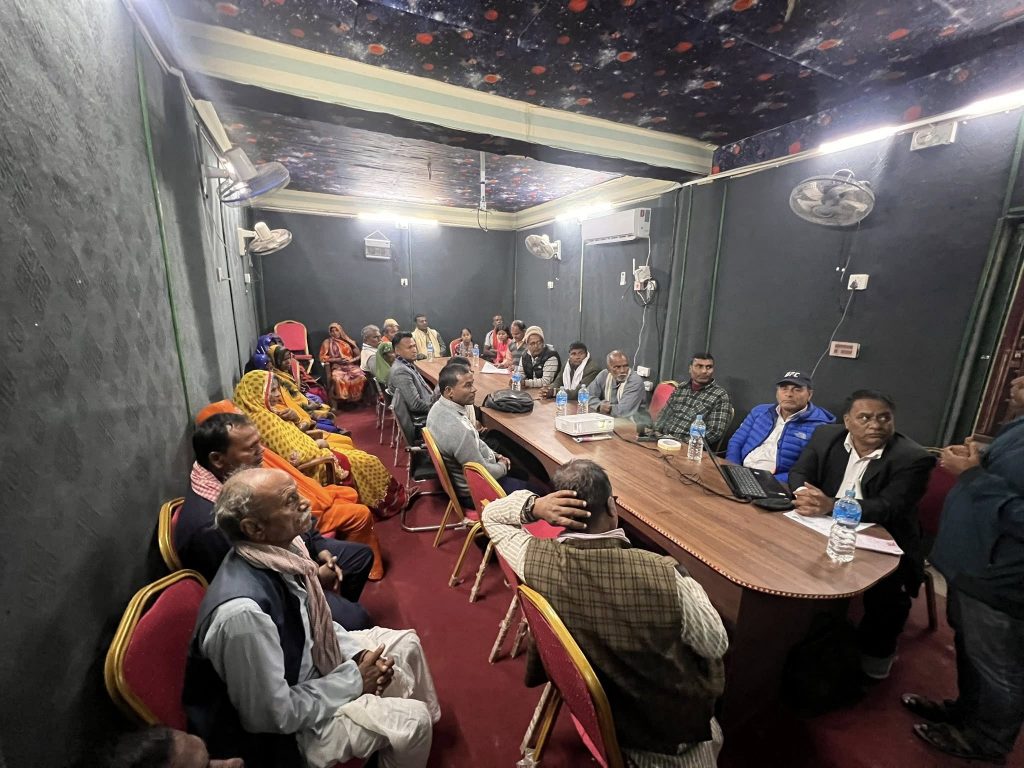
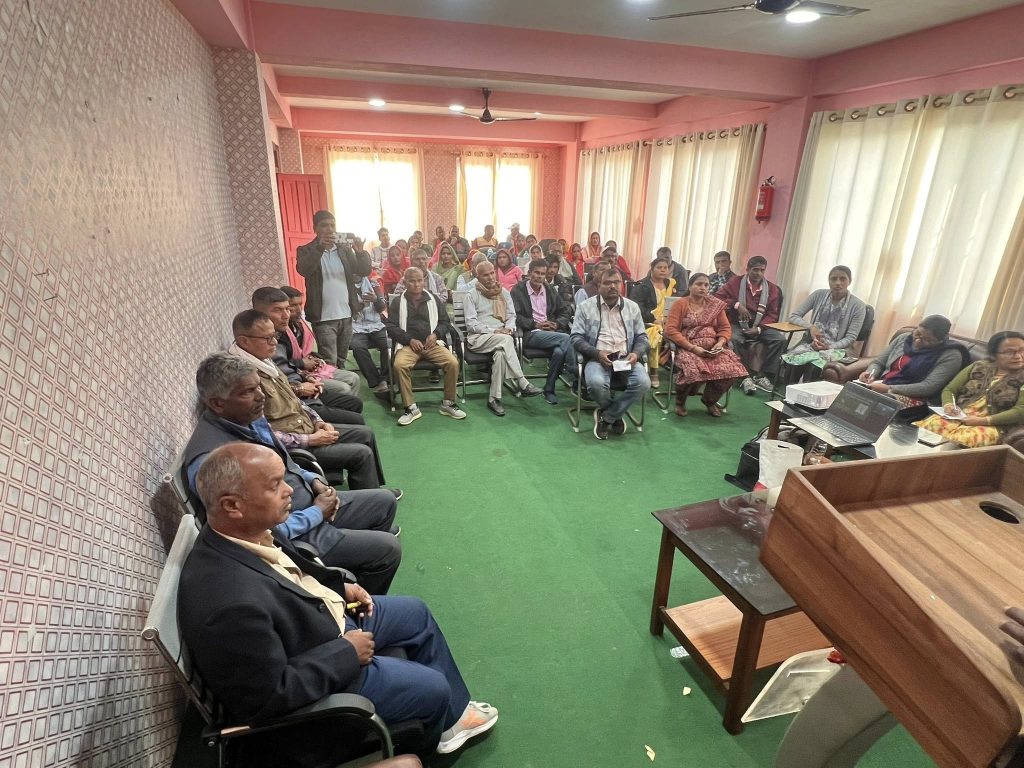
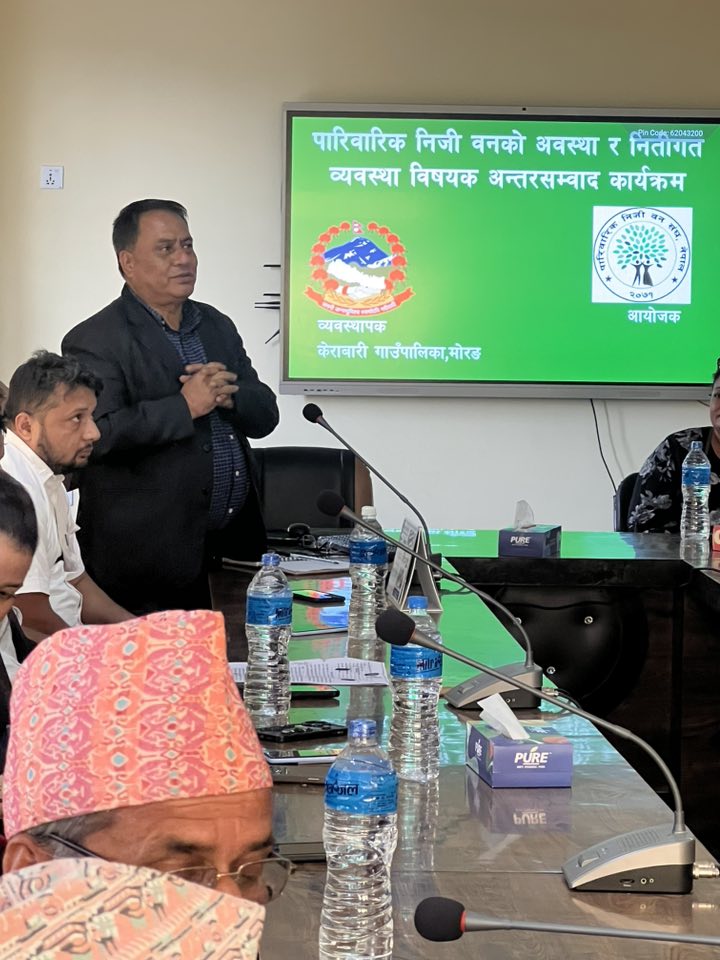
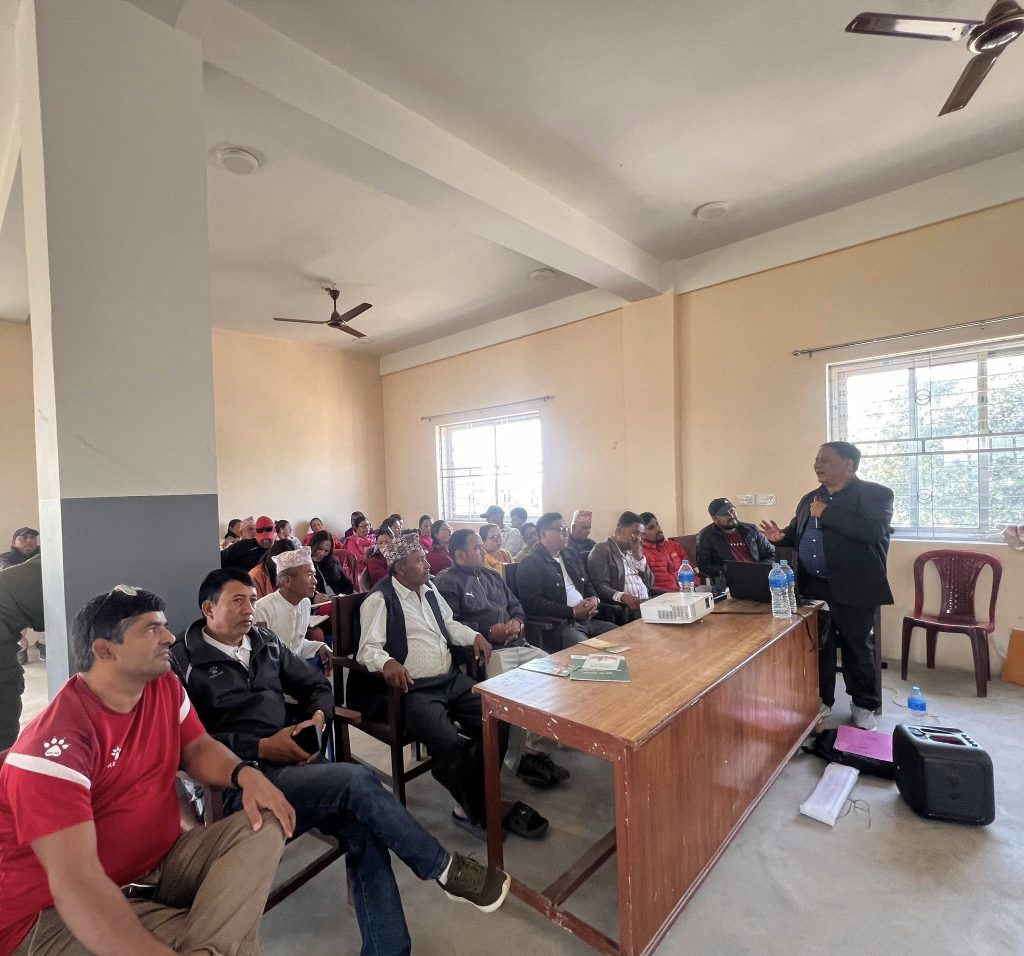
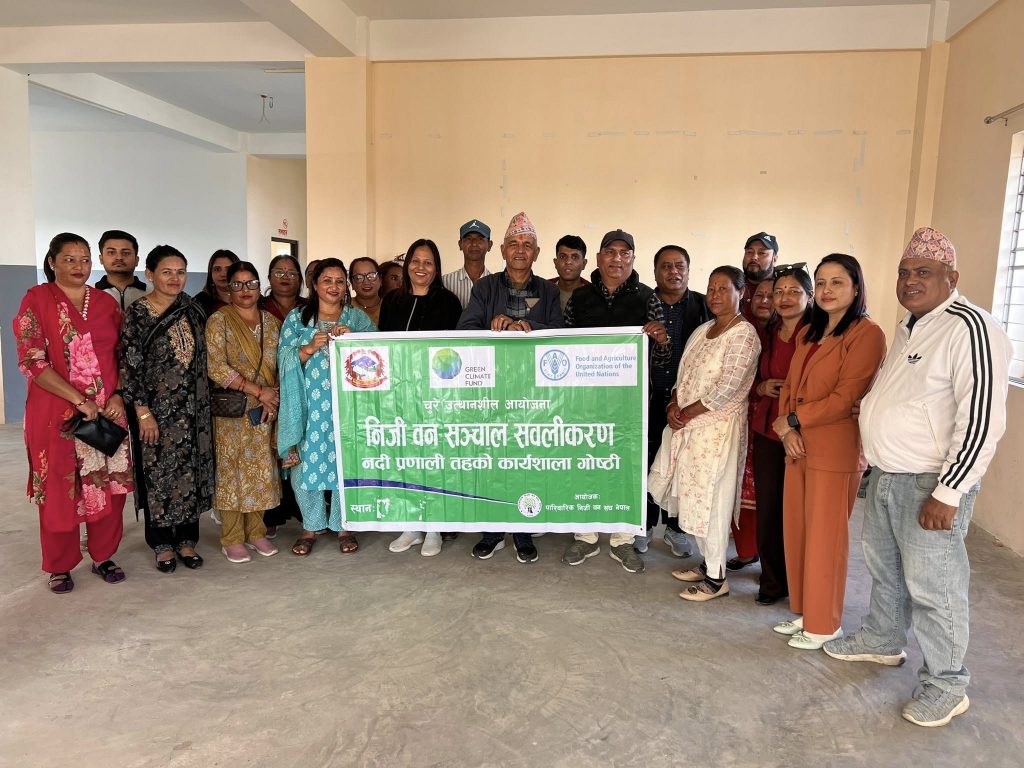
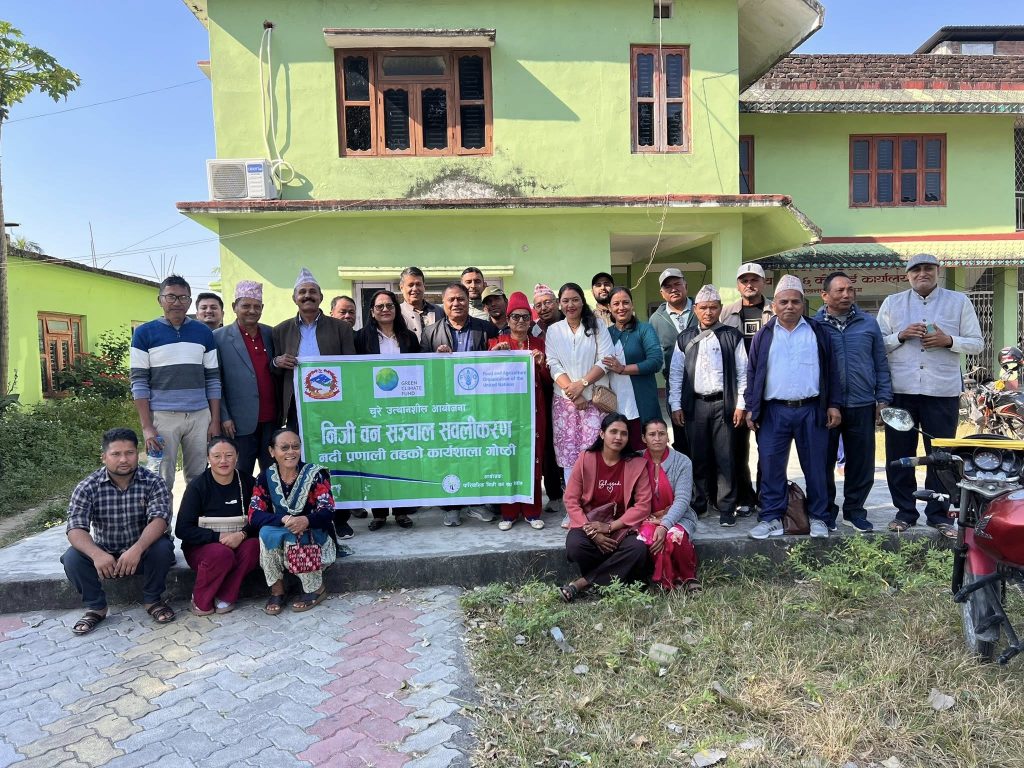
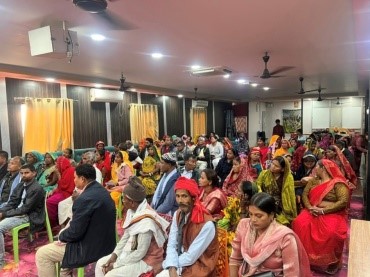
As part of its ongoing commitment to climate resilience, inclusive forestry development, empowerment of individuals and communities in private forestry promotion and forest-based enterprise development, Association of Family Forest Owners Nepal (AFFON) organized and facilitated 135 cluster level meetings (63 PF groups in Koshi Province, 65 PF groups in Madhesh Province and 7 PF groups in Bagmati Province) for PF groups in 21 River systems, 21 river system level meetings for 21 PF networks, 21 municipal level workshops for the municipal representatives and officials within the river systems and 3 interaction meetings with Provincial Project Management Units (PPMUs) in the BRCRN project area ensuring inclusive participation and representation from women, indigenous peoples, marginalized groups, Dalits and Madhesis.
The cluster-level meetings marked a significant step toward strengthening the voice, visibility, and viability of private forest farmers in the BRCRN project area. Through inclusive dialogue, capacity building, and coordinated action, private forest groups are now better positioned to contribute to climate resilience, local livelihoods, and environmental sustainability. The PF networks expressed a powerful sense of ownership and commitment to expanding private forestry initiatives. This initiative will also contribute to mitigating greenhouse gas emissions as well as to adapt to the adverse climate. The local government and PPMUs were sensitized on their role in PF extension and promotion.
In overall, AFFON’s engagement contribute not only to encourage individual interested households to go for private plantation but also the established groups and networks as well as the municipal authorities to understand the policies, plans, activities and institutions engaged to promote private forestry and their roles, rights and responsibilities regarding establishment an institutionalization of private forestry groups. We can assure that this project acted as the bridge between cluster levels PF groups/networks, PPMUs and local governments that will be established as a milestone for private forestry extension.