Call Us
Mail Us
Address
Kharibot Road, New Baneshwor Ward No. 31, Kathmandu, Nepal
Kharibot Road, New Baneshwor Ward No. 31, Kathmandu, Nepal
 Our Stories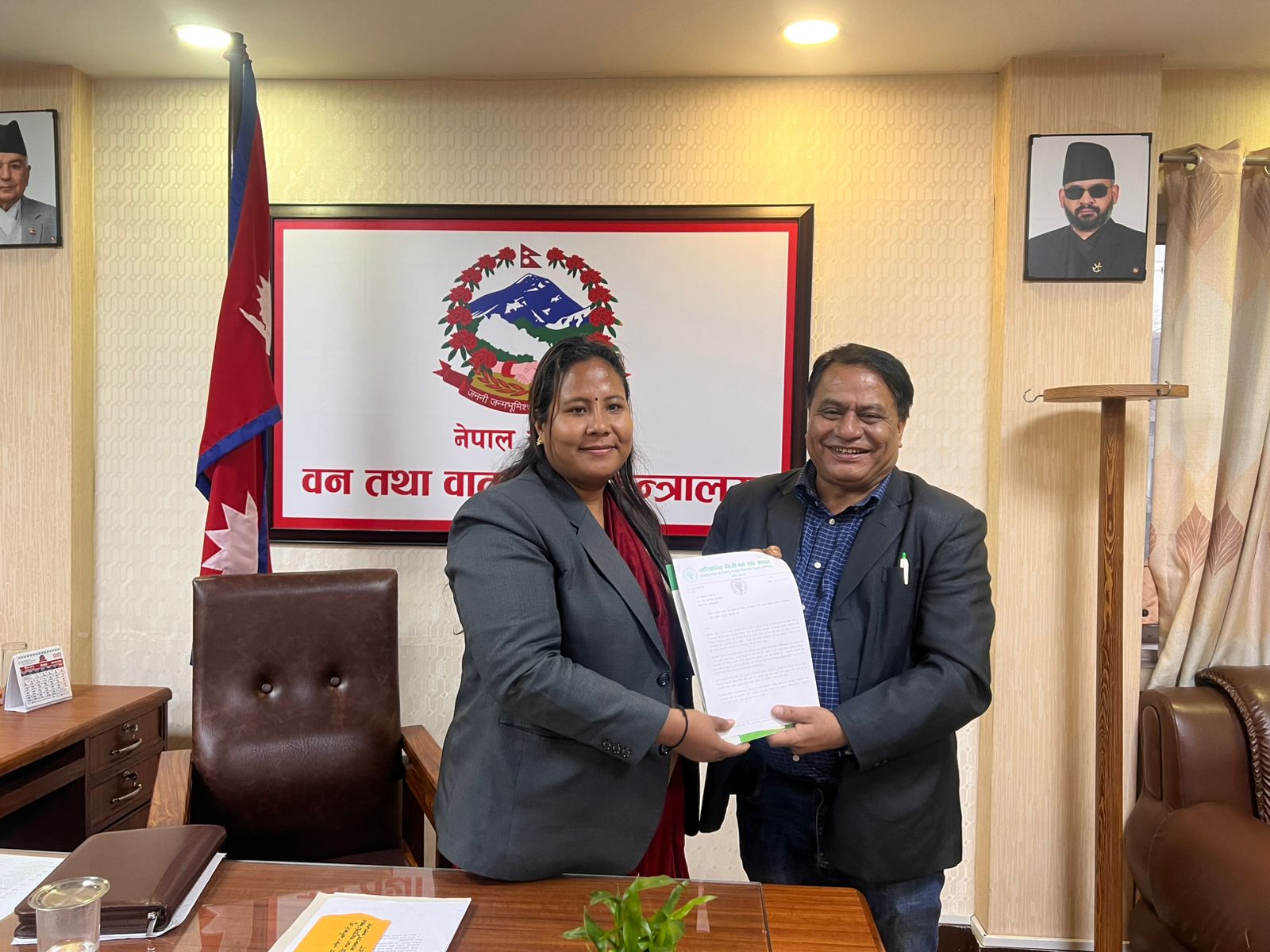
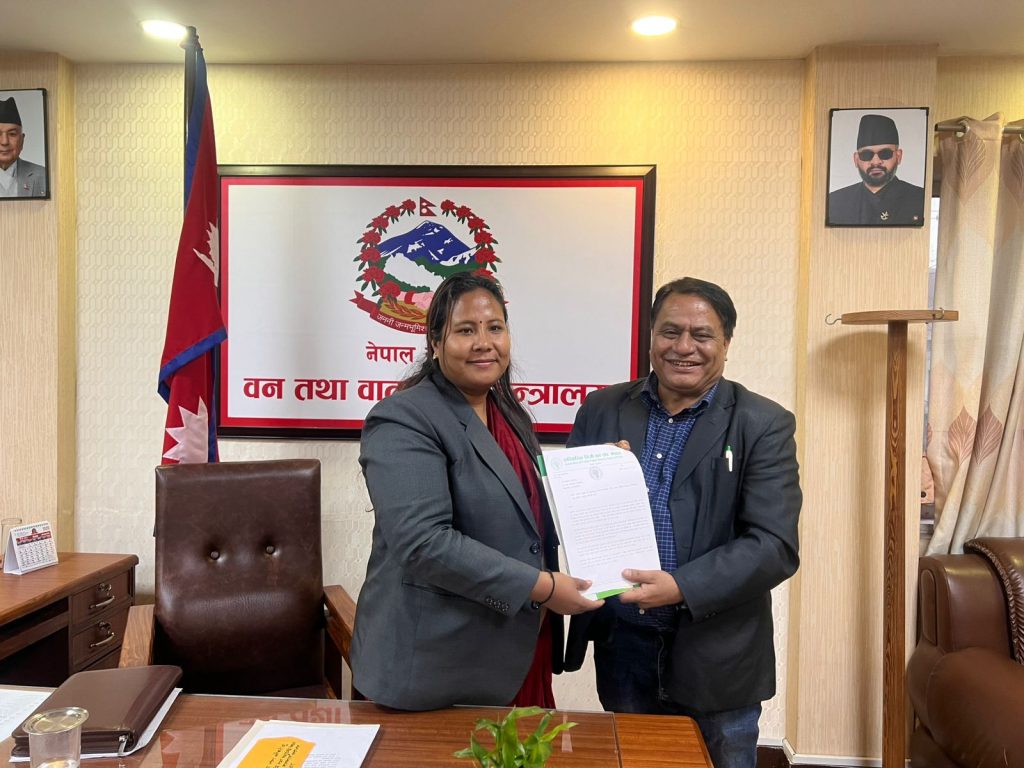
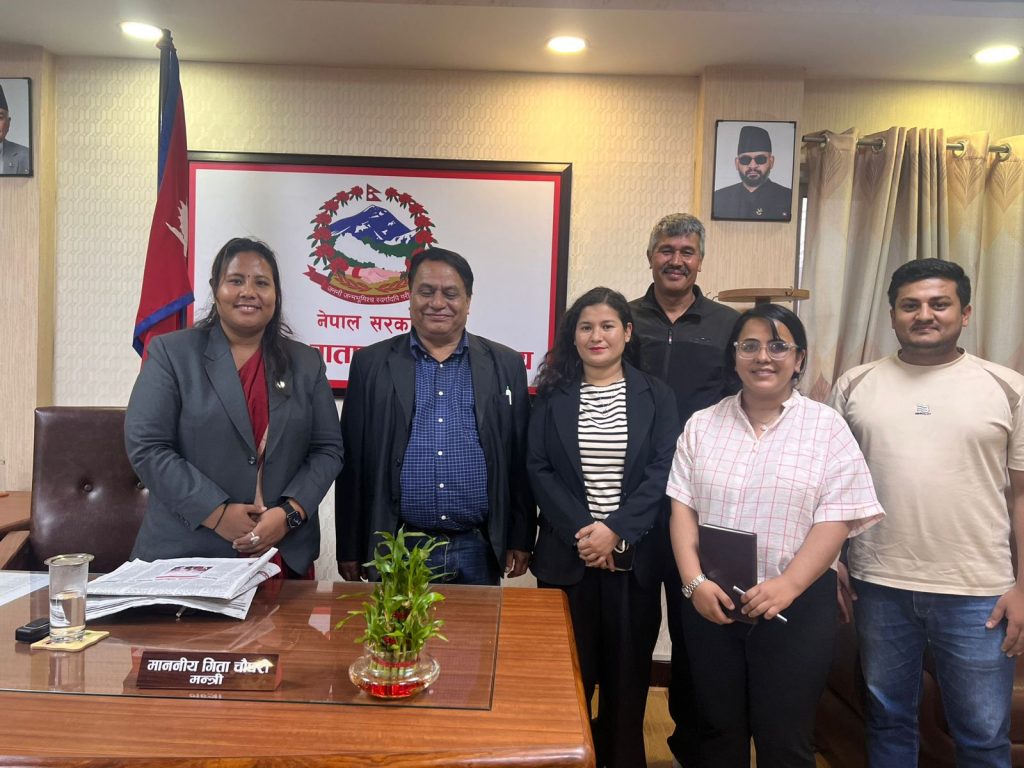
The Association of Family Forest Owners’ Nepal (AFFON) recently extended warm congratulations to Honorable Gita Chaudhary, the newly appointed Minister of Forest and Environment, Nepal. On behalf of the association, Chairperson Mr. Jograj Giri expressed best wishes for her successful tenure and urged her to prioritize resolving policy complexities related to family forests. He emphasized the importance of introducing farmer-friendly policies, promoting forest-based entrepreneurship, simplifying legal arrangements, and ensuring fair access to carbon benefits. To formalize these requests, AFFON handed over a detailed memorandum to the Honorable Minister, outlining key area of policy advocacy and enterprise promotion aimed at empowering local communities and strengthening Nepal’s forest economy. The memorandum highlights the need to amend Forest Regulation 2079 to explicitly authorize local governments in granting permissions for transporting forest products of local private owned family forest farmers, and to amend the Gazette to remove unnecessary requirements for tree registration in the sale of Sal (Shorea robusta) timber and firewood. It calls for the simplification of forest product collection in protected areas, treating forest products like agricultural goods, lifting restrictions on species such as Vijaya Sal (Pterocarpus marsupium) and Satisal (Dalbergia latifolia), delegating authority for CITES listed species to local governments, and creating a separate release order system for privately owned family forests. AFFON also advocates for insurance schemes, government grants, concessional loans, fair access to carbon trading benefits with at least 25 percent allocated to family forest farmers, and cash based benefit distribution. Furthermore, the memorandum stresses the need for representation of family forest farmers in institutional structures, given their contribution of nearly 50 percent to the country’s timber supply. In addition to policy advocacy, AFFON emphasizes the promotion of forest enterprises and strengthening of the local economy. It calls for supportive policies to establish small and medium enterprises based on timber, herbs, fruits, fibers, and non-timber products, coordination loans, and market access, regular training and technical support for farmers in enterprise management and marketing, diversification of enterprises into eco-tourism, herbal industries, incense production, and bamboo based products, and tax concessions to make forest enterprises more attractive and commercially viable. Through this memorandum, AFFON has clearly articulated the aspirations of Nepal’s family forest farmers, highlighting the urgent need for reforms that will ensure sustainability, empower communities and unlock the full potential of family forests in strengthening the national economy.