
Call Us
Mail Us
Address
Kharibot Road, New Baneshwor Ward No. 31, Kathmandu, Nepal
Kharibot Road, New Baneshwor Ward No. 31, Kathmandu, Nepal
 Our Stories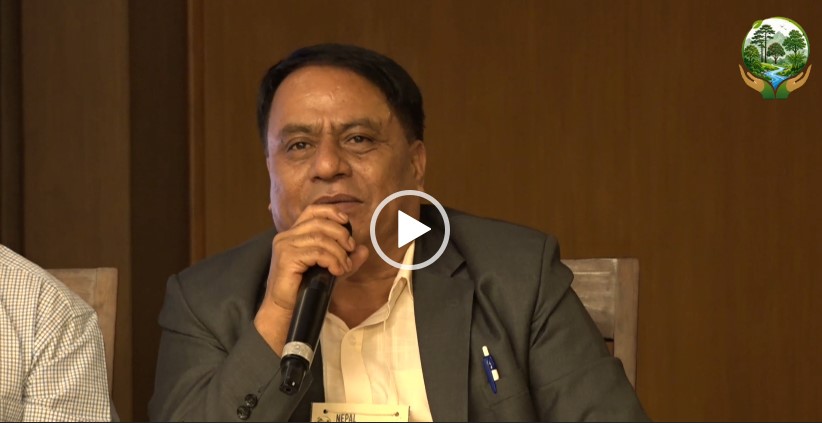
The Nepal Forest Tenure Conference (NFTC) was jointly hosted by Nepal’s Tenure Facility (TF) partners, with Green Foundation Nepal (GFN) serving as the lead organizer and FECOFUN and CIPRED as consortium partners. The conference was supported by several sub-partners, among which the Association of Family Forest Owners Nepal (AFFON) was one. The conference was held from 4th to 6th July 2026. This conference brings together policymakers, practitioners, researchers, entrepreneurs, community leaders, youth and development partners to share knowledge, experience, and innovations for building sustainable, resilient and inclusive communities.
During the conference, a panel discussion was held under the thematic session, “Dedicated Grant Mechanism to Secure IPLCs.” The panel featured Shree Maharjan, Jagat Baram, representatives of the Voice of DGM Grantees, Jog Raj Giri, and Deepa Oli which was moderated by Dr. Bishnu Hari Poudel. Representing the Association of Family Forest Owners Nepal (AFFON), Chairperson, Mr. Jog Raj Giri highlighted the importance of securing the rights of family forest owners, with particular emphasis on tree tenure rights. He stressed that family forests are among Nepal’s most valuable yet often overlooked environmental and economic assets. Despite their significant contribution to timber production, biodiversity conservation, and rural livelihoods, family forests continue to receive limited policy attention. He called for stronger legal recognition and a more enabling policy environment to safeguard the rights of family forest owners and promote sustainable forest management.
Mr. Giri pointed out that although Nepal’s National Forest Policy 2019 envisions removing policy barriers affecting family forests, the provisions of the Forest Act and Forest Regulations often contradict this objective. According to him, these inconsistencies create uncertainty for family forest owners and restrict their ability to manage, utilize, and benefit from forests established on their own land.
Addressing the issue of carbon rights, he questioned why the benefits from carbon stored in family forests should not belong to the landowners who have invested their own land, labor, and resources to establish and protect these forests without government investment. He argued that recognizing the rights of family forest owners over carbon benefits is essential to ensure fairness and encourage continued investment in sustainable forestry.
Citing research by Dr. Maniram Banjade, Mr. Giri highlighted that nearly 82% of Nepal’s timber supply comes from family forests, demonstrating their critical contribution to the national economy and forest sector. He also noted that Nepal has an estimated more than 100,000 hectares of family forests, which play a vital role in conserving biodiversity, reducing pressure on national forests, and supporting rural livelihoods.
In his concluding remarks, Mr. Giri stressed that progressive policies alone are insufficient unless they are backed by consistent laws and regulations. He called for stronger legal recognition of family forest owners’ rights and a more enabling policy environment that encourages sustainable investment and recognizes family forestry as a key partner in achieving Nepal’s economic, environmental, and climate goals.
Although Nepal’s National Forest Policy 2019 commits to removing policy barriers affecting family forests, the Forest Act and Forest Regulations often contradict this objective. These inconsistencies create uncertainty for family forest owners and restrict their ability to fully utilize and benefit from the forests they have established.
The issue becomes even more significant when discussing carbon rights. Farmers invest their own land, labor, and resources to plant and protect family forests, with no government investment. Therefore, a fundamental question arises: Who should own the carbon benefits, the government or the landowners who created and maintained these forests?
Research by Dr. Maniram Banjade estimates that nearly 82% of Nepal’s timber comes from family forests. Despite generating significant timber, government revenue, and environmental benefits, family forestry has received relatively little policy attention. Nepal is also estimated to have more than 100,000 hectares of family forests, which reduce pressure on national forests while conserving biodiversity and supporting rural livelihoods.
Strong policies alone are not enough. They must be supported by consistent laws and regulations that protect the rights of family forest owners and encourage sustainable investment. Recognizing family forest as a key partner in Nepal’s forest sector is essential for achieving economic growth, environmental conservation, and climate goals.